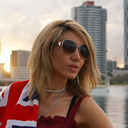
Notorious for its knife crime, gang violence and shootings I put my steel stethoscope on and decided to see what the fuss was all about.
Much to my surprise the patients were all very pleasant and polite and generally consultations were quick and easy.
Some of the most interesting differences I noted between working in London versus Australia was the strong cockney accent and the differing ethnic diversities. It is such an honour to be in a position to be able to reach out to different populations and spread the word of health promotion and disease prevention.
I’m pleased to have worked there, albeit for a short time, and felt no threat to myself. Would I be back? Well only in London would you see a dog strolling in a trolley and have the royal family on your doorstep, so yes, if the opportunity arose I’d definitely make my way back there again.
PECKHAM
Peckham is a district of south London, England, within the London Borough of Southwark. 3.5 miles south-east of Charing Cross. At the 2001 Census the Peckham ward had a population of 14,720
With alarming statistics that 1 out of 2 Australians will get a skin cancer at some point in their life, it’s important that as a general practitioner I can assess and diagnose these lesions. To do so I use a dermascope or a dermatoscope. This is a device that looks at the surface of the skin with a magnifying glass and light.
Inside the Dermlite DL4 box you will find:
With me here is the dermlite DL4
- A leather carry case
- A USB charging cable
- A lens wipe
- 5 Ice caps - these are essential to prevent cross contamination between patients.
The dermascope has a 30mm viewing lens, with 10 x magnification. It has both polarised and non polarised light capabilities.
Polarised light allows us to assess the depth of structures.
In the non polarised mode we can inspect superficial skin layers - such as the dermo-epidermal junction. In the polarised mode we can inspect deeper skin layers including the dermo-epidermal junction and superficial dermis. The polarised light allows for the identification of blood vessels and pink colour. This increases sensitivity for diagnosing amelanotic melanomas or BCCs.
The non polarised light increases the specificity to identify milia like cysts (which are white) or comedo-like openings seen in seborrhoeic keratosis.
So being able to toggle between the two has a far more superior diagnostic capability.
The dermoscope allows for both contact and non contact on the skin, you may also use immersion liquid in the non-polarised setting.
On the side you can see another button which allows for pigment boost, when used this makes the colour of lesions pop for easier identification.
Just a word of caution, if you’re thinking of having a skin check after watching this video please choose your practitioner carefully. Some physicians will just use their eyes for a skin check, however, I would suggest going to someone who has detailed equipment because unfortunately as humans we haven’t yet learnt how to magnify our vision!
I’ll usually use the dermascope with my magnifying loupes to assess the skin closely and ensure that every centimetre is investigated thoroughly for a comprehensive skin check.
If you’ve not booked in for a skin check in the past year or are concerned that a lesion has changed in size, colour, shape or is itchy or bleeding please seek medical advice or pop by and see me in clinic.
I hope you’ve found this video useful and if you have any questions please drop me a line below in the comments section.
I’m now available for bookings at Southport Metro Medical for all of your general medicine, family planning, skin checks and cosmetic injectable needs.
Dr Nora is a GP from London, England. She graduated from St George’s University of London in 2011. She carried out her postgraduate speciality studies in the South-West of London. She is a member of the Royal College of General Practitioners and The Faculty of Sexual & Reproductive Healthcare.
Dr Nora has a Diploma in Women’s Health & Family Planning and enjoys practising Minor Surgery and Facial Aesthetics. She has a specialist interest in chronic disease management such as Diabetes and Respiratory Health and takes a proactive approach to health promotion. She is also fluent in the Arabic language.
In this episode I take you on my journey of working as a GP in rural Australia. For the next two weeks I’ll be working from the tropical paradise of the Whitsundays. I share with you some interesting differences between working in a rural town versus working in a metropolitan city and the type of cases that I’ve been presented with.
WHITSUNDAYS
The 74 Whitsunday Islands lie between the northeast coast of Queensland, Australia, and the Great Barrier Reef, a massive stretch of coral teeming with marine life. Most of the islands are uninhabited. They’re characterised by dense rainforest, hiking trails and white sand beaches. The town of Airlie Beach on the mainland is the region’s central hub.
When it comes to cosmetic injectables having sound knowledge of anatomy is of paramount importance.
Today I’m at the Australasian Society of Aesthetic Plastic Surgeons Anatomical Dissection Workshop getting hands on demonstrations of where injections can be performed safely and where they should be avoided helping to keep you all in safe hands.
Take care and stay healthy 😘
Dr Nora 💉
Warning: any surgical or invasive procedure carries risks. Before proceeding, you should seek a second opinion from an appropriately qualified health practitioner.