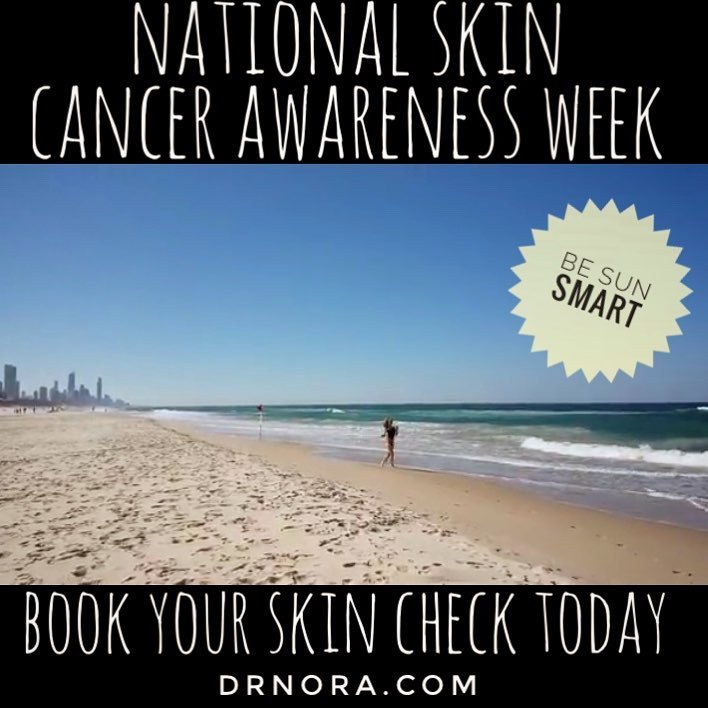
It’s National Skin Cancer Action Week. Two in three Australians are diagnosed with skin cancer by the age of 70 and more than 2000 people die of skin cancer each year.
Most skin cancers are preventable by the use of good sun protection:
- slip on sun-protective clothing 👚
- Slop on SPF 30+ broad spectrum sunscreen ✋️
- Slap on a broad brimmed hat 🎩
- Seek shade ⛱
- Slide on sunglasses 🕶
It’s important to stay out of the sun from 11-3pm as that’s when the sun is strongest. If you need to step out make sure you keep exposure to a minimum and use protective gear.
Getting to know your skin and regularly checking your moles is a great way to notice any changes that you can alert to your doctor. Make sure you see your doctor if notice any change in the colour, size, shape of a mole or if they become itchy or bleed.
Skin checks are simple and easy and are a great way to prevent any long term problems.
Let’s join the #SunSmartGeneration with the Cancer Council Australia 😎
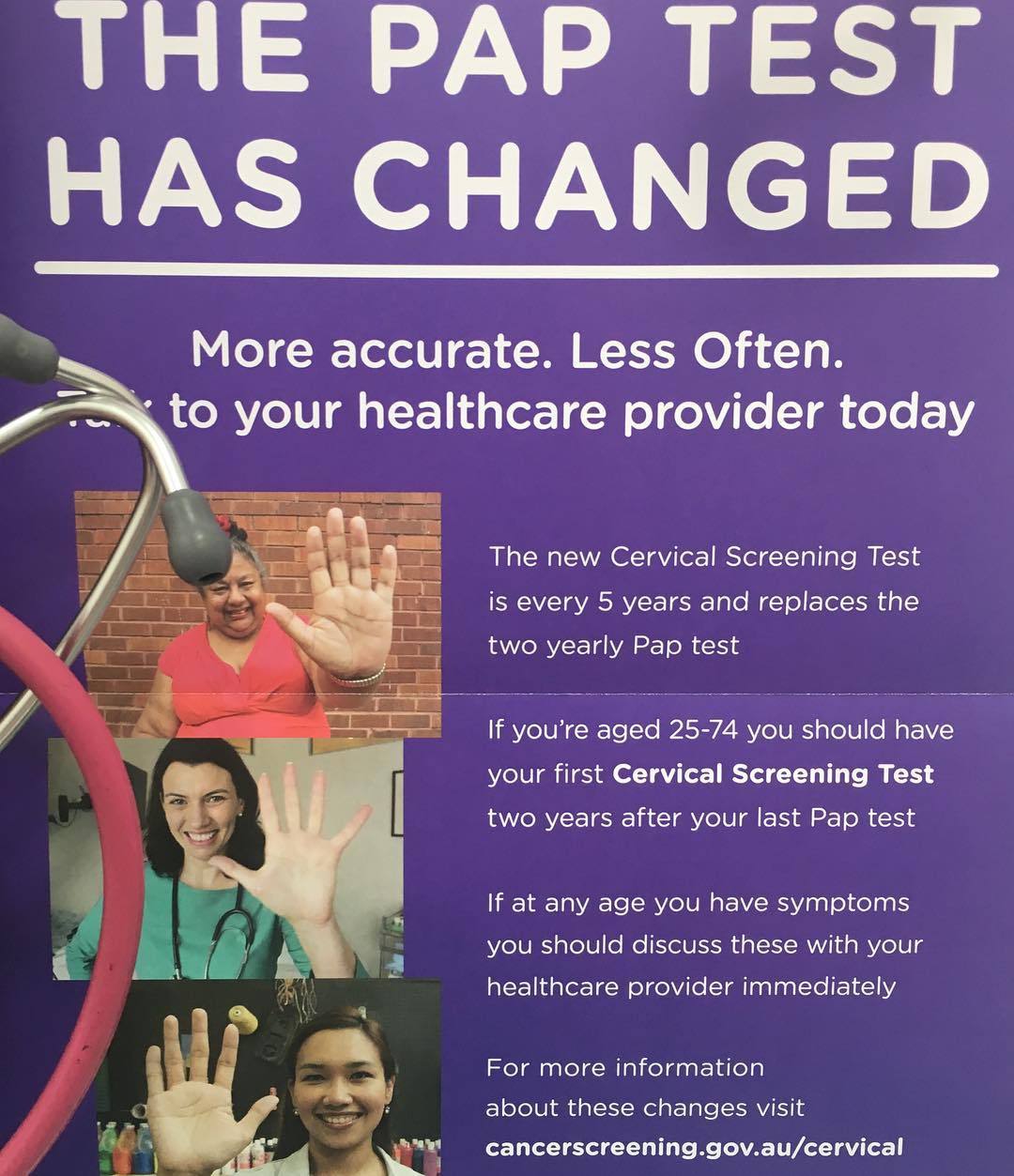
Did you know that the traditional PAP smear is changing in Australia?
It’s being replaced with a new Cervical Screening Programme from 1st December 2017.
What is the Cervical Screening Programme?
This is a test that is quick and simple to check the health of your cervix (neck of the womb). It is done by your health care provider.
What is different about the new programme?
The cervical screen is done in the same way as the traditional PAP smear so it will not feel any different to you.
The new test is more effective at detecting the human papilloma virus (HPV) that causes cervical abnormalities, at an earlier stage.
Who needs testing?
If you’re a woman aged between 25-74 years of age and have ever been sexually active the test is open for you every 5 years.
When shall I have a cervical screening test?
Your first test will be due at 25 years of age or two years after your last PAP test. If your result is normal you will be due in five years for your next test.
How common is Cervical Cancer?
Cervical cancer is rare. In Australia every year around 800 women are diagnosed with cervical cancer. However most cervical cancer is preventable with regular screening.
Feel free to drop by my clinic if you have any further questions.
Take care & stay healthy
Dr Nora x
Information was collected from The National Screening Program - Australian Government.